
A New Asian Tour for The Veterinary Dentist This September

After a well-deserved break in Cape Town, Cedric Tutt — The Veterinary Dentist — has packed his dental instruments and boarded a plane east. This new Asian tour takes him through Hong Kong, Singapore, and Vietnam, with a patient list that reads like a wildlife documentary.

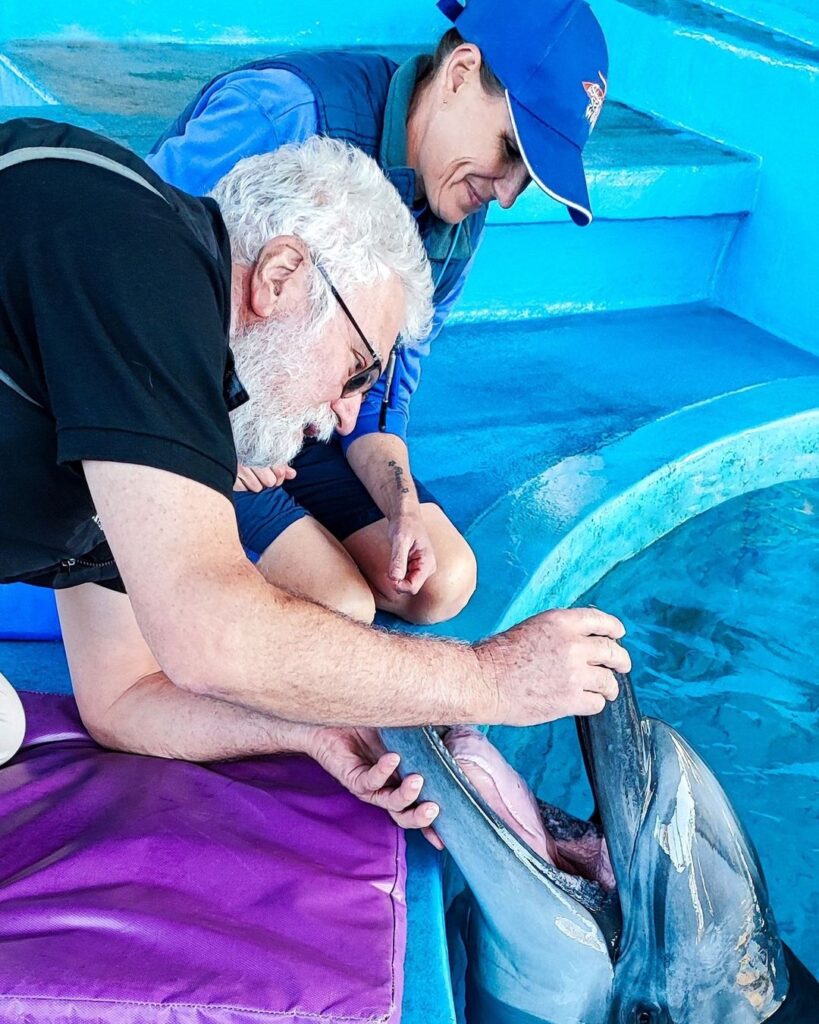
The uShaka Sea World dolphins were visited by veterinary dental specialist Dr Tutt

Hong Kong: Household Pets and Iconic Wildlife

The Hong Kong leg opens with familiar territory: dogs and cats. Routine dental procedures in companion animals: scaling, extractions, periodontal assessments… form the backbone of any veterinary dental practice, and Cedric’s expertise in this area is well established.
But Hong Kong also brings two extraordinary patients: the Giant Panda and the Golden Monkey. Dental care in these species demands a very different approach. Giant pandas, as strict bamboo feeders, develop specific wear patterns on their carnassial teeth and molars. Any periodontal disease or tooth fracture can directly compromise their ability to feed, making dental intervention genuinely life-altering. Golden monkeys, highly social primates, present their own anaesthetic and behavioural challenges: oral examinations require careful planning and close collaboration with the zoological team.

Singapore: Beneath the Surface with Dolphins

Singapore brings Cedric to the marine mammal unit, where dolphins await their dental check-ups. Cetacean dentistry is a niche within a niche. Dolphins possess homodont dentition (a uniform set of conical teeth) which may seem straightforward, but tooth fractures, pulp exposure, and periodontal pocketing are documented concerns in managed populations. Preventive care and early detection are the priorities here, often carried out with animals trained for cooperative behaviour, reducing the need for full anaesthesia.

Vietnam: Sun Bears, Moon Bears and the Challenges of Ursid Dentistry

The final stop takes Cedric to Vietnam, where sun bears (the smallest bear species, native to Southeast Asian forests) and moon bears (also known as Asiatic black bears1) present some of the most demanding dental cases in exotic animal practice.
Sun bears are known for their exceptionally long canine teeth and powerful jaws. Dental disease, often linked to captivity conditions, can cause chronic pain and behavioural changes. Cedric’s work here contributes directly to animal welfare in a region where sun bear conservation efforts are ongoing.
Moon bears tell a similar story, though often a darker one. Many of the individuals Cedric will see come from rescue centres, having spent years in bile farming conditions. The toll on their oral health can be severe: fractured teeth, advanced periodontal disease, and chronic pain are common findings. Dental care in these bears is rarely straightforward, but it is always meaningful. Each procedure is a step toward a better quality of life for animals that have already been through a great deal.

More updates from the field will follow as the tour progresses.